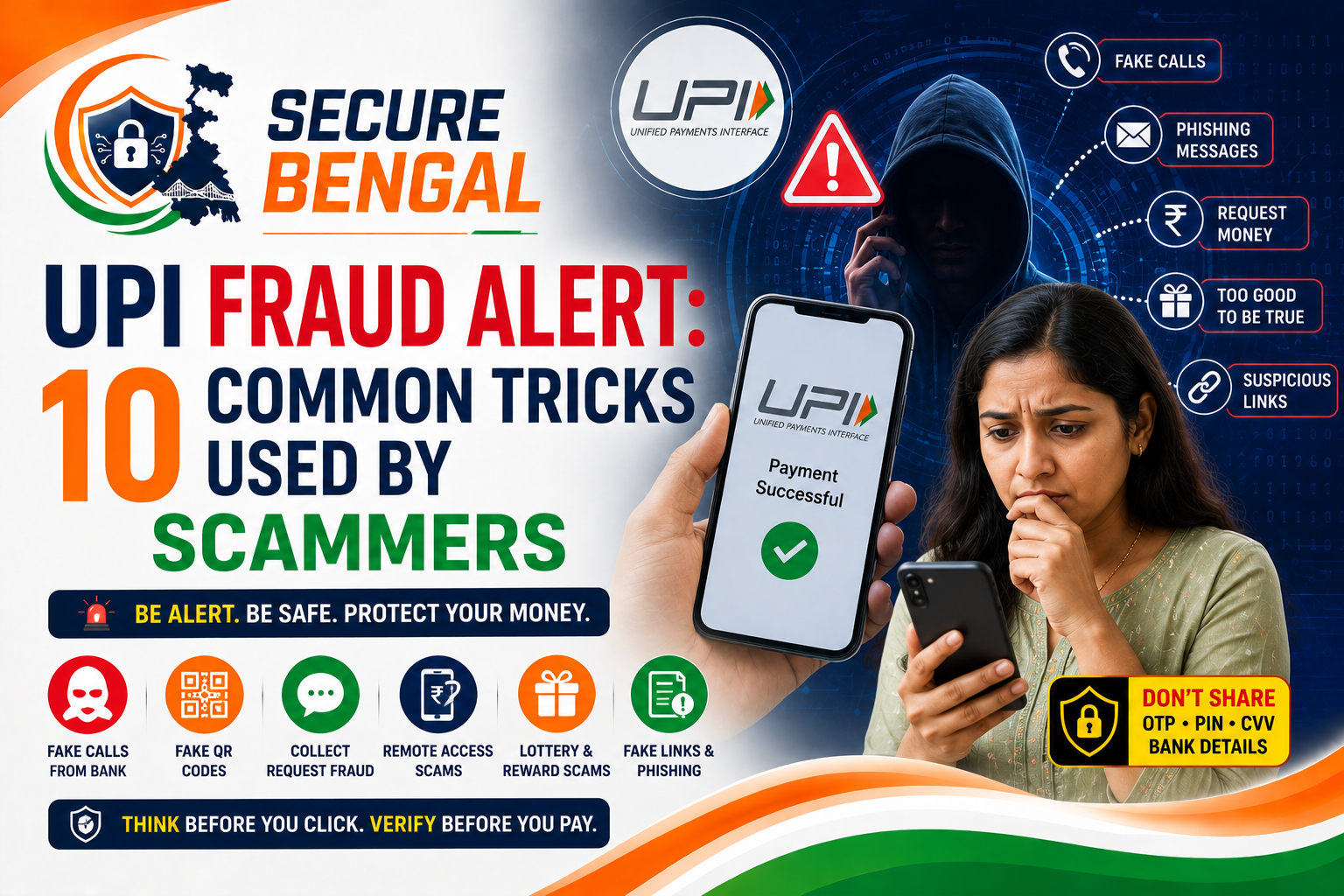
Unified Payments Interface (UPI) has revolutionized digital payments by making money transfers quick, easy, and convenient. Millions of people now use UPI apps daily for shopping, bill payments, banking, and online transactions. However, as digital payments grow, cybercriminals are also developing new ways to exploit users through UPI frauds.
Scammers use fake calls, phishing links, QR codes, screen-sharing apps, and social engineering tactics to steal money from unsuspecting victims. Many people lose their savings simply because they are unaware of these tricks.
Understanding how these scams work is essential for protecting yourself and your finances.
What Is UPI Fraud?
UPI fraud occurs when cybercriminals manipulate users into:
Sharing confidential banking information
Authorizing fake payment requests
Installing malicious apps
Granting unauthorized account access
Fraudsters often create panic, urgency, or trust to trick victims into making mistakes.
10 Common UPI Scams Used by Cybercriminals
1. QR Code Scam
One of the most common UPI frauds involves fake QR codes.
Scammers may say:
“Scan this QR code to receive money.”
In reality, scanning the QR code sends money from the victim’s account instead of receiving it.
Safety Tip
Remember:
Scanning a QR code is usually for making payments, not receiving money.
2. Fake Customer Care Numbers
Fraudsters post fake customer support numbers online for banks, payment apps, or e-commerce companies.
When victims call these numbers, scammers:
Ask for OTPs
Request remote access
Steal banking details
Safety Tip
Always use customer care numbers from official websites or apps only.
3. Screen Sharing App Fraud
Scammers convince victims to install apps such as remote-access or screen-sharing software.
Once installed, criminals can:
View OTPs
Access banking apps
Control the device remotely
Safety Tip
Never install unknown apps at someone else’s request.
4. Fake Payment Screenshot Scam
Fraudsters send edited screenshots claiming payment has already been made.
This scam commonly targets:
Online sellers
Small businesses
Freelancers
Safety Tip
Always verify payments directly in your bank or UPI app before delivering goods or services.
5. Collect Request Scam
Scammers send fake “collect requests” on UPI apps.
Victims mistakenly approve the request, believing they are receiving money.
Safety Tip
Carefully read payment notifications before approving any request.
6. KYC Update Scam
Victims receive messages claiming:
UPI accounts will be blocked
KYC verification is pending
Immediate action is required
The links usually lead to fake websites designed to steal credentials.
Safety Tip
Banks and payment apps never ask for sensitive information through random links or calls.
7. Lottery and Cashback Scams
Fraudsters claim victims have:
Won prizes
Received cashback rewards
Been selected for promotional offers
Victims are then asked to:
Pay processing fees
Share account details
Approve fraudulent requests
Safety Tip
If an offer seems too good to be true, it probably is.
8. SIM Swap Fraud
Cybercriminals trick mobile operators into transferring a victim’s mobile number to a new SIM card.
Once successful, scammers can:
Receive OTPs
Access banking accounts
Reset passwords
Safety Tip
If your phone suddenly loses network service unexpectedly, contact your mobile provider immediately.
9. Social Media Marketplace Fraud
Scammers pretend to be buyers or sellers on online marketplaces.
Common tricks include:
Fake payment confirmations
Fraudulent refund requests
QR code manipulation
Safety Tip
Use secure payment methods and verify transactions independently.
10. Impersonation Calls
Fraudsters pretend to be:
Bank officials
Police officers
Government authorities
Payment app representatives
They create fear or urgency to pressure victims into sharing confidential information.
Safety Tip
Never share:
OTPs
ATM PINs
Passwords
CVV numbers
Legitimate organizations never ask for these details over calls.
Warning Signs of UPI Fraud
Be alert if you notice:
Unexpected payment requests
Messages creating panic or urgency
Unknown QR codes
Requests to install apps
Calls asking for confidential information
Suspicious links from unknown numbers
Awareness can prevent financial loss.
Essential UPI Safety Tips
Use Official Apps Only
Download payment apps only from trusted app stores.
Avoid unofficial or modified versions.
Enable App Security Features
Use:
App lock
Fingerprint authentication
Strong device passwords
Extra security layers help protect accounts.
Never Share Confidential Details
Do not share:
OTPs
UPI PINs
Banking passwords
Debit card details
Even with people claiming to be from the bank.
Verify Before Paying
Double-check:
UPI IDs
Phone numbers
Merchant details
before making payments.
Monitor Transactions Regularly
Review bank statements and UPI transaction history frequently to identify suspicious activity early.
What to Do If You Become a Victim
If UPI fraud occurs:
Immediately contact your bank.
Block the affected account or UPI service.
Report the fraud to cybercrime authorities.
Change passwords and security credentials.
Preserve screenshots and transaction details as evidence.
Quick action improves the chances of limiting financial damage.
The Importance of Digital Awareness
As digital payments continue to grow, cyber awareness is becoming a necessary life skill. Scammers constantly adapt their techniques, making public awareness the strongest defense against fraud.
Educational campaigns, family discussions, and digital literacy programs can help users stay informed and protected.
Conclusion
UPI has made financial transactions faster and more convenient than ever before. However, convenience must be balanced with caution. Cybercriminals rely on confusion, urgency, and lack of awareness to carry out fraud.
By understanding common UPI scams, verifying requests carefully, and following basic cybersecurity practices, users can safely enjoy the benefits of digital payments while protecting their hard-earned money.
In the digital world, awareness is the best protection against fraud.